
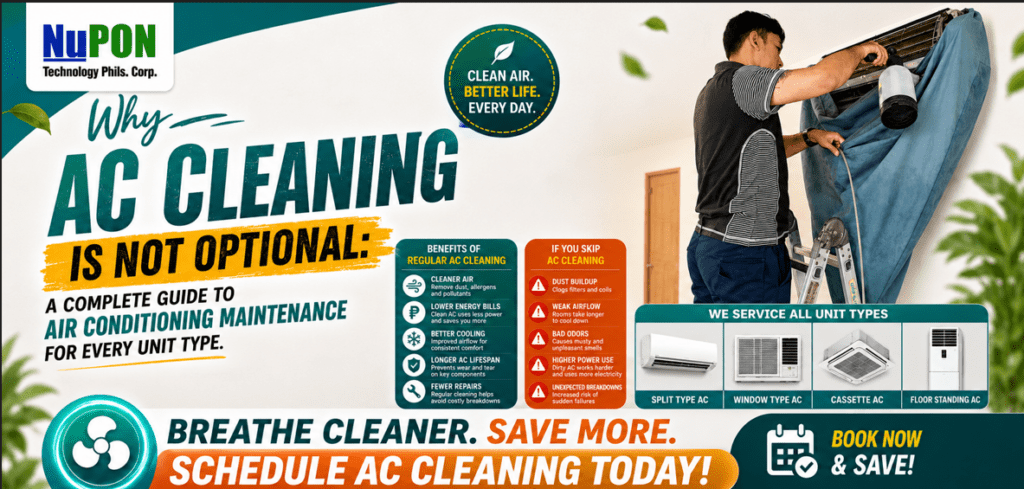
Wondering if air conditioning cleaning is really worth it? Discover why regular AC cleaning improves air quality, cuts energy bills, extends unit lifespan, and keeps every type of unit running at peak performance — explained simply and honestly.
Let’s be honest — most of us don’t think about cleaning our air conditioner until something goes wrong. Maybe it starts blowing warm air, making a strange noise, or the electricity bill suddenly jumps without explanation. Sound familiar?
Here’s the truth: your air conditioner works hard every single day, especially in a tropical climate where it runs almost non-stop. And just like any hardworking machine, it needs regular care. Air conditioning cleaning isn’t just a nice-to-have — it’s one of the most important maintenance habits you can build for your home or business.
In this guide, we’ll walk you through everything you need to know — what AC cleaning actually involves, why it matters for each type of unit, what happens when you skip it, and the real advantages you’ll notice once you make it a habit.
What Exactly Is Air Conditioning Cleaning?
Air conditioning cleaning is the process of removing dust, mold, bacteria, grime, and debris that accumulate inside your AC unit over time. It covers both the internal components (evaporator coils, blower fan, drain pan, air filters) and the external parts (condenser coils, fins, compressor area).
A proper cleaning isn’t just a quick wipe of the front panel. A professional AC cleaning service typically includes:
- Filter washing or replacement — Clogged filters are the number one cause of poor airflow and reduced cooling efficiency.
- Evaporator and condenser coil cleaning — These coils transfer heat. When they’re coated in dust and grime, your unit has to work much harder to do its job.
- Drain line flushing — A blocked drain line leads to water leaks, mold growth, and water damage.
- Fan blade cleaning — Dirty fan blades reduce airflow and create that musty smell you’ve probably noticed.
- Sanitizing and deodorizing — Killing off bacteria and mold spores that circulate through the air you breathe.
Does It Matter What Type of AC Unit You Have?
Absolutely. Every type of air conditioning unit has its own cleaning requirements, and skipping service that’s specific to your unit type can cause real damage over time.
Window-Type Air Conditioners
Window units are probably the most common and most neglected when it comes to cleaning. Because they sit in a fixed position, dust and moisture build up both inside and outside the unit. The filters on window ACs need washing every two weeks in high-use periods, and a deep clean every three to four months is ideal.
What to watch for: water dripping inside the room (blocked drain), reduced cooling despite running at full blast, and a musty or stale smell when you first switch it on.
Split-Type Air Conditioners (Wall-Mounted)
Split systems are now the most popular type in homes and offices — and they need professional attention at least twice a year. The indoor unit’s evaporator coils and blower fan accumulate an alarming amount of grime that you can’t see from the outside. The outdoor condenser unit also needs cleaning to ensure proper heat exchange.
A dirty split-type unit doesn’t just cool less efficiently — it can develop ice formation on the coils, which causes water to drip inside and damages the unit over time.
Cassette-Type Air Conditioners
Cassette units are installed in the ceiling and are common in commercial spaces, restaurants, and larger homes. Because they’re mounted overhead and draw air from all four sides, they tend to accumulate dust faster than wall-mounted units.
Cleaning cassette units requires proper access equipment and technical knowledge. The return air grilles and filters need regular attention, and the coil and drain tray require a thorough flush to prevent overflow.
Floor-Standing / Tower Air Conditioners
These units pull air from the bottom and distribute it at floor level, which means they’re constantly in contact with floor dust, pet hair, and debris. Floor units need their filters cleaned frequently — sometimes weekly in dusty environments — and a professional deep clean every two to three months.
Ducted / Central Air Conditioning Systems
Ducted systems are the most complex and arguably the most critical to keep clean. The duct network itself can harbor years’ worth of dust, allergens, mold, and even rodent debris if not properly maintained. A dirty duct system circulates all of that through every room it serves.
Ducted system cleaning involves cleaning the AHU (air handling unit), all supply and return vents, the ductwork itself, and the drain system. This is strictly professional territory and should be done at least once a year.
Portable Air Conditioners
Portable units are often overlooked because they seem simple. But they have filters, evaporator coils, and water collection tanks that need regular attention. A neglected portable AC will smell bad and lose cooling capacity quickly.
What Exactly Is Air Conditioning Cleaning?
Air conditioning cleaning is the process of removing dust, mold, bacteria, grime, and debris that accumulate inside your AC unit over time. It covers both the internal components (evaporator coils, blower fan, drain pan, air filters) and the external parts (condenser coils, fins, compressor area).
Does It Matter What Type of AC Unit You Have?
Absolutely. Every type of air conditioning unit has its own cleaning requirements, and skipping service that’s specific to your unit type can cause real damage over time.
Window-Type Air Conditioners
Window units are probably the most common and most neglected when it comes to cleaning. Because they sit in a fixed position, dust and moisture build up both inside and outside the unit. The filters on window ACs need washing every two weeks in high-use periods, and a deep clean every three to four months is ideal.
What to watch for: water dripping inside the room (blocked drain), reduced cooling despite running at full blast, and a musty or stale smell when you first switch it on.
Split-Type Air Conditioners (Wall-Mounted)
Split systems are now the most popular type in homes and offices — and they need professional attention at least twice a year. The indoor unit’s evaporator coils and blower fan accumulate an alarming amount of grime that you can’t see from the outside. The outdoor condenser unit also needs cleaning to ensure proper heat exchange.
A dirty split-type unit doesn’t just cool less efficiently — it can develop ice formation on the coils, which causes water to drip inside and damages the unit over time.
Cassette-Type Air Conditioners
Cassette units are installed in the ceiling and are common in commercial spaces, restaurants, and larger homes. Because they’re mounted overhead and draw air from all four sides, they tend to accumulate dust faster than wall-mounted units.
Cleaning cassette units requires proper access equipment and technical knowledge. The return air grilles and filters need regular attention, and the coil and drain tray require a thorough flush to prevent overflow.
Floor-Standing / Tower Air Conditioners
These units draw air from the bottom and distribute it at floor level, so they’re constantly in contact with dust, pet hair, and debris on the floor. Floor units need their filters cleaned frequently — sometimes weekly in dusty environments — and a professional deep clean every two to three months.
Ducted / Central Air Conditioning Systems
Ducted systems are the most complex and arguably the most critical to keep clean. The duct network itself can harbor years’ worth of dust, allergens, mold, and even rodent debris if not properly maintained. A dirty duct system circulates all of that through every room it serves.
Ducted system cleaning involves cleaning the AHU (air handling unit), all supply and return vents, the ductwork itself, and the drain system. This is strictly professional territory and should be done at least once a year.
Portable Air Conditioners
Portable units are often overlooked because they seem simple. But they have filters, evaporator coils, and water collection tanks that need regular attention. A neglected portable AC will smell bad and lose cooling capacity quickly.
None of these outcomes is inevitable — and all of them are preventable with consistent maintenance.
Learn more about our services. Visit our Facebook page: https://www.facebook.com/NuponACServices